

Irresistible Change is a newsletter about organizational culture, transformation, and design. It’s written for executives who recognize that tools and methods come and go, but it’s culture that drives sustainable, differentiated outcomes. And that the status quo is a culture’s mortal enemy.
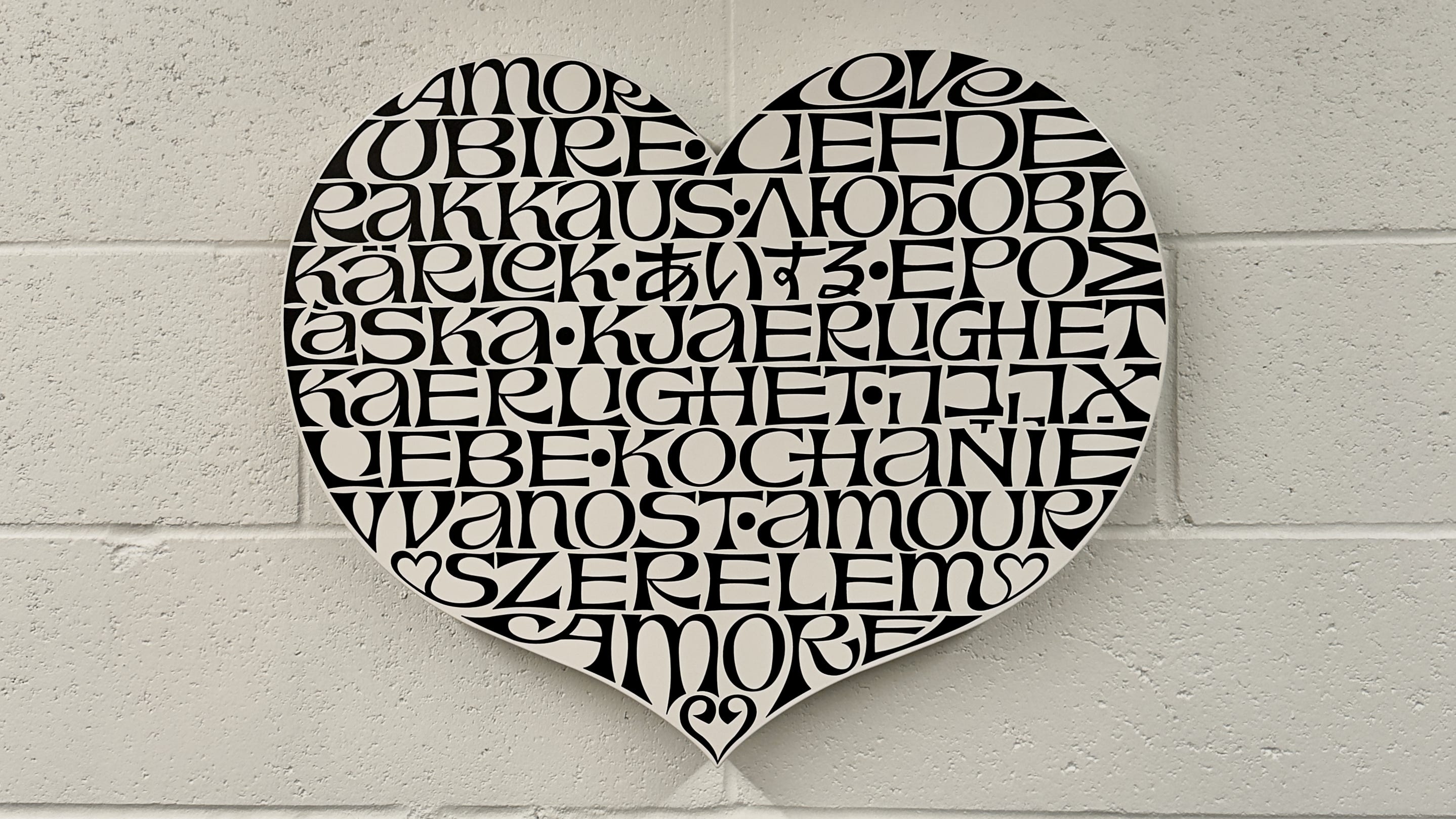
Thursday, November 20 at the Eames Institute of Infinite Curiosity in Richmond, CA, we continued the Irresistible Change book tour in a place that feels both timeless and startlingly alive. It was a magical evening spent not just among the works of Ray and Charles Eames, but truly among the work — the ideas, prototypes, experiments, convictions, and restless curiosity that defined some of the most significant design contributions of the 20th century.
That’s the revelation of visiting the Eames Institute: you feel the process as much as you see the artifacts.
“Art resides in the quality of doing; process is not magic” - Charles Eames
Standing in that archive, surrounded by objects that carry both rigor and playfulness, the truth of that is unmistakable.
At this second San Francisco stop, I was joined by Llisa Demetrios, Charles and Ray’s granddaughter, along with John Cary and the rest of the extraordinary team at the Eames Institute. After a tour of the archives, we held a conversation about the IBM–Eames relationship and the ways that the Eames’ philosophy shaped IBM beginning in the 1950s and continuing straight through the transformation I led decades later.
In many ways, the very notion of making change irresistible traces back to one of Charles’ most powerful ideas:
“The role of the designer is that of a very good, thoughtful host, anticipating the needs of his guests.”
That idea sat at the center of how we approached our work at IBM. In fact, here’s how I described it in the book:
On the Sunday before we launched the bootcamp for our very first Hallmark team… “Until now,” I said, “we’ve been in the Hallmark business. We’ve been in the design business. Tonight, that stops. From this day forward, we’re in the hospitality business.”
“These bootcampers are our customers. We’re not doing them a favor—they’re doing us a favor by showing up.”
Every aspect of your change program must embrace that guest–host relationship. Employees are not doing you a favor by participating; they are helping you achieve your mission. Treat them as valued guests, and they’ll walk through fire for you.
Toward the end of our conversation last night, we turned to the era we now find ourselves in — one defined by artificial intelligence and a sheer, disorienting abundance of data. It can feel overwhelming, much like the pointless man in Harry Nilsson’s The Point, who was surrounded by signposts pointing in every possible direction. As he says,
A point in every direction is the same as — as no point at all!
That’s what unfiltered AI acceleration is: endless possibility, yet with no direction home.
Someone in the audience asked “how do we navigate this moment?” I said I didn’t have a pat answer, but that when I faced such moments, I always find myself coming back to something deceptively simple: just do the work.
It’s in the action that we find our footing.
Sitting in that archive, surrounded by thousands of things but almost nothing that was “finished” — because nothing in the Eames world is ever finished — it becomes obvious. Everything is a prototype. A continuation. A gesture in a much longer arc. It reminded me of when Charles was asked
Is Design a creation of an individual? And he said “No, because to be realistic, one must always recognize the influence of those that have gone before.”
Doesn’t that imply progress, not just iteration? The future has never been a matter of random change; it has always been informed change — shaped by the prototypes, missteps, and insights of those who came before. There has always been noise, the inherent inability to see the path clearly. If the future were obvious, there would be no need for prototypes at all. Design exists because of that uncertainty. It is the discipline we use to navigate what can’t yet be fully understood.
I take comfort in that. Working through the noise — probing, shaping, clarifying — is the design process.
And this process matters even more now, as we approach a world where the tasks required to generate code-based artifacts — early prototypes, mockups, simulations — will increasingly be handled by AI. The cost of producing a digital artifact will approach zero. But reducing the cost of generation only increases the value of judgment.
Which brings me back to Charles’ words from the 1972 film Design Q&A:
Can the computer substitute for the designer? “Probably, in some special cases, but usually the computer is an aid to the designer.”
And later:
Is [Design] a method of general expression? “No — it is a method of action.”
Tools will evolve. Some tasks the designer once owned will be automated. But Design — the thoughtful, step-by-step act of making sense of complexity — will remain human.
And I believe the winners that emerge after the AI tooling transformation will be those that double down on Design. Because that will be the dominant human skill required to surface the remaining value humans bring to outcomes.
Indeed, for digital interfaces, it may be the only human skill that truly matters by the end of this century.
(This article originally published on LinkedIn by author on November 25, 2025)