

The Irresistible Change® newsletter is about organizational culture, transformation, and design. It’s written for executives who recognize that tools and methods come and go, but it’s culture that drives sustainable, differentiated outcomes. And that the status quo is a culture’s mortal enemy.
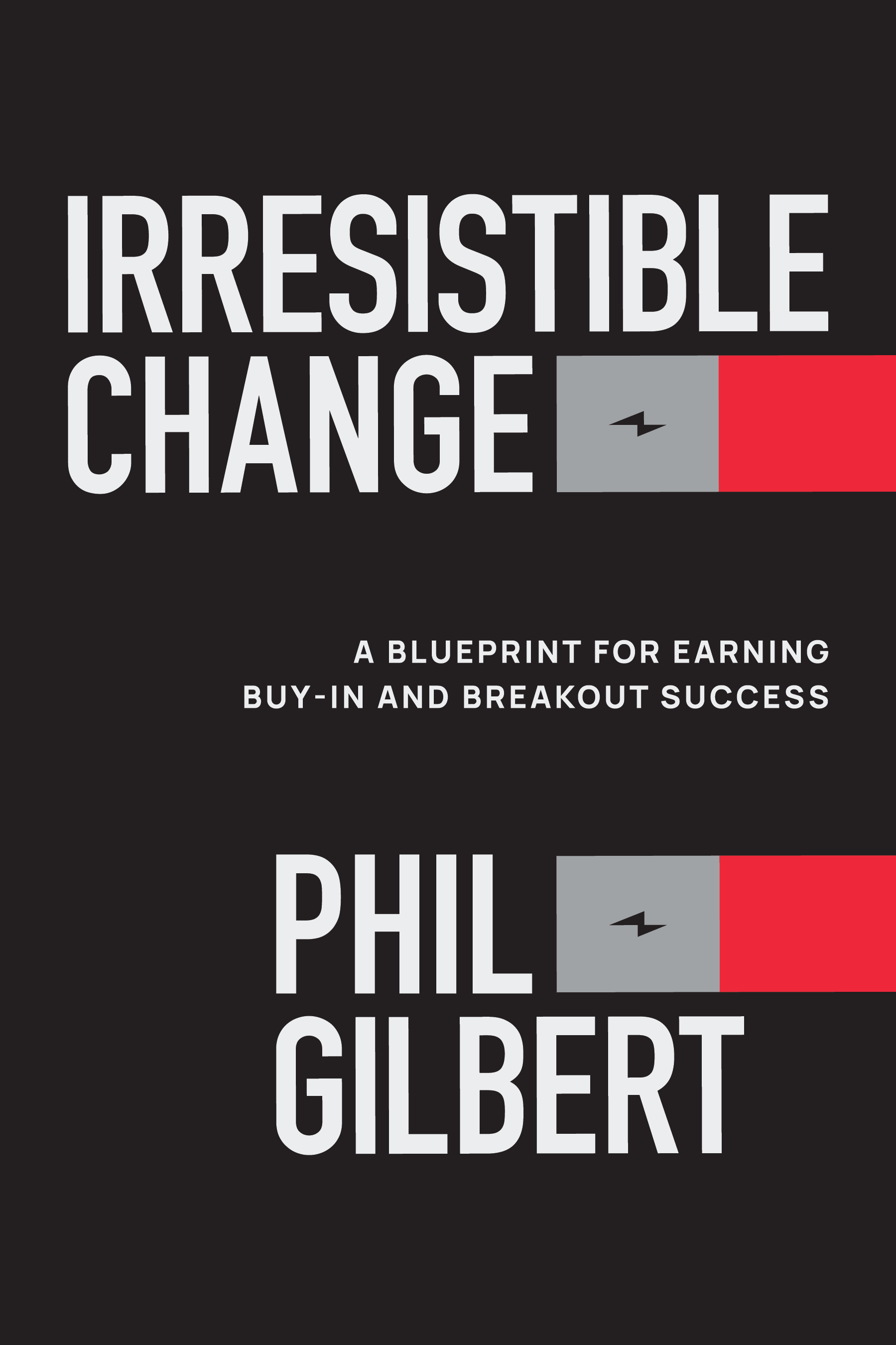
For years, people have asked me to put IBM’s transformation story — and the lessons from it — into a book. I finally did. It’s called Irresistible Change: A Blueprint for Earning Buy-In and Breakout Success, and you can find out where to purchase it here.
“Irresistible Change is Phil Gilbert’s brilliantly insightful account of his time leading and driving IBM’s move toward a new way of operating—nothing less than turning a battleship against headwinds and currents. His success was not serendipitous, but instead the product of thoughtful planning, careful communication, and relentless pursuit of doing what works. Less complicated than difficult, change demands deft, committed leadership, and a deep understanding of both the challenge and criticality of adapting.”
Stan McChrystal
General, US Army (Retired)
Founder and Chairman/CEO of McChrystal Group
and best-selling author of Team of Teams
Whether we’ve worked together directly, or your path was shaped by the ripple effects of IBM’s design and transformation work, this book captures the mindset and methods we used to make culture a competitive advantage. Ordering it is a small gesture that helps carry those ideas forward — at a moment when organizations need them more than ever.
Excerpt from Chapter 1 - Setting the Stage
The business process management portfolio was a mess that needed some serious sorting, with 44 software products in various niches, many of which competed against each other. I would need to integrate Lombardi’s products and people into this mix, along with those of another acquisition, a French company that had continued marketing its products under its original brand name for more than a year.
And although the BPM group was more than four times the size of Lombardi, it was tiny from the IBM perspective, with just 1,100 employees in a company of about 400,000. Running this walled-off sandbox meant I could make some radical changes to operations, and they would barely register as ripples within IBM. At the very least, I hoped, I might retain some of Lombardi’s more spirited and valuable people.
Could it be done? I wasn’t sure. Lombardi’s company culture relied on a customer-focused work method called design thinking, which called for us to study how our users responded to our products. Then we iterated and tested prototypes with them. We knew these people intimately, we cared about their tasks and how easily they were able to perform them, and we designed each update with that as the priority. That’s why our customers loved our products. Software development at Lombardi was flexible, fast, and based on human-centered problem-solving. It was miles away from IBM’s hierarchical, procedure-oriented, engineering-centric work culture.
The transformation of IBM’s BPM group took 500 days. We pruned the bloated product line from 44 to 4. We reduced the head count from 1,100 to 700, and this included adding some new employees as professional designers to help guide the work of the product teams. Those 500 days involved a lot of rough sledding. Sacred cows were gutted amid org chart infighting galore. There were many days I figured I’d gone too far, and I expected to see an email from Robert LeBlanc with some version of “Stop! Enough already!” That email never came.
Over the 500 days, we cut down product time to market, raised gross margins, and grew our market share in the BPM space. Our customers loved the new product line and our employees were engaged and energized. Robert, meanwhile, protected us and caught a lot of flak on our behalf—more than I knew, at the time. His forbearance of my sometimes heavy-handed ways (ham-handed, some might say!) had paid off.
About this time, at the end of 2011, Ginni Rometty was seated as the ninth CEO in IBM’’s 101-year history. Although the company still reigned as the world’s largest computer services provider, her immediate challenges included slowing sales growth and sagging employee morale. Ginni had worked her way to the top at IBM over 31 years, and although she loved IBM, she was intimately familiar with the root sources of the company’’s troubles: our clients didn’t like using our products, it was difficult to do business with us, and we weren’’t moving fast enough. Ginni put the question to her top executives: what are we going to do?
That’s when Robert offered a suggestion: “We have this guy in Austin. Maybe he can help.”
_____
Excerpted with permission from Irresistible Change: A Blueprint for Earning Buy-In and Breakout Success by Phil Gilbert. Copyright ©2025 by John Wiley & Sons, Inc. All rights reserved. This book is available wherever books and eBooks are sold
Irresistible Change is a registered trademark of Gilbert Workshop LLC. All rights reserved.